What is a Bitcoin Mixer?

Understanding Bitcoin Mixing Technology

What is a Bitcoin Mixer

What is a bitcoin mixer

Bitcoin Mixer is a tool or service designed to make it harder to connect bitcoins sent from one address with bitcoins later received at another. Mixers are also called tumblers. They address an easy-to-overlook feature of Bitcoin: although addresses don’t display a person’s name, transactions and amounts are recorded on a public, permanent blockchain.

If an address can be linked to someone through an exchange, business, or public post, its transaction history may reveal more than that person intended.

How does Bitcoin mixing work?

The basic idea is to disrupt the visible path between a transaction’s inputs and outputs. A custodial mixer takes in Bitcoin from users, pools or redistributes the funds, and then sends Bitcoin to new addresses, usually after a delay and for a fee. This requires trust: the operator could keep funds, record user information, or fail to return the expected amount.

Other approaches coordinate a shared transaction among participants. In CoinJoin, for example, multiple users contribute inputs to one transaction with many outputs. An outside observer can see the transaction, but may have difficulty determining which output belongs to which participant.

No single operator needs to take custody of everyone’s bitcoin, though users still depend on the software and coordination process working as intended. These methods do not erase, encrypt, or rewrite the blockchain. They make some connections less certain.

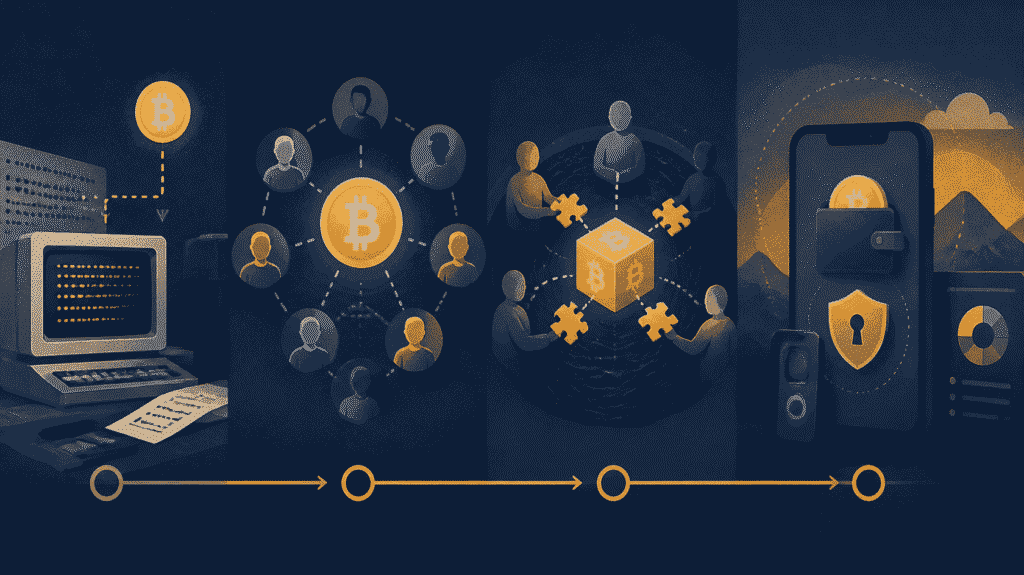
A short history of Bitcoin Mixer

Bitcoin mixer history

People began discussing collaborative Bitcoin transactions as a privacy technique in the early 2010s. Gregory Maxwell proposed the CoinJoin name and approach in 2013. Early online mixers offered a simpler, centralized option; later designs explored ways for users to mix without handing funds to one operator. 

Wallets and protocols have continued to experiment with collaborative transactions, but adoption, ease of use, and the privacy each method provides have varied over time. The history reflects a continuing tension: improving privacy while limiting the trust and coordination users must accept.

Why seek more privacy?

Mixing is intended to make financial activity less easy for other people to map. A person may not want a merchant, business partner, or casual observer to connect a payment with their savings, salary, donations, or other purchases. It can also reduce the amount of information revealed when someone spends bitcoin received at an address they have used publicly.


Privacy is not inherently the same as hiding wrongdoing. At the same time, mixing can be used to conceal proceeds of crime or sanctions evasion, and authorities treat some mixing activity as a financial-crime risk. Rules differ by country and can depend on whether a person is using software, operating a service, or transmitting funds for others. Anyone considering a mixer should understand the laws that apply where they live and the policies of any exchange or service they use.

What are the limitations?

Mixing does not make Bitcoin anonymous. The transactions remain public, and analysts may use timing, amounts, transaction structure, wallet behavior, or information from exchanges to infer links. If users combine mixed funds with identifiable funds later, they may weaken the privacy they sought. The privacy set also matters: a transaction with few plausible participants can offer less ambiguity than one with many.

There are practical risks, too. A custodial service may steal funds, leak records, or be compromised. A collaborative method can reduce custody risk but may still expose information through its coordinator, software, or a participant’s behavior. Transactions can incur fees, take time, and receive extra scrutiny from financial services. Bitcoin’s public history is permanent, so future analysis may reveal connections that are unclear today.

The takeaway

A Bitcoin mixer is a privacy tool that tries to obscure the apparent link between sending and receiving addresses. It can add uncertainty to blockchain analysis, but it cannot guarantee anonymity, remove transaction history, or eliminate legal and security risks. Understanding the specific method—and its trust assumptions and limits—is essential before concluding what mixing can protect.

Transparent blockchain

References:
Bitcoin.org: Protect your privacy – link
Bitcoin Optech: CoinJoin – link 
FinCEN: CVC mixing notice – link 

Scroll to Top